Mazda CX-5 2026: Design, Interior, and Bigger Dimensions
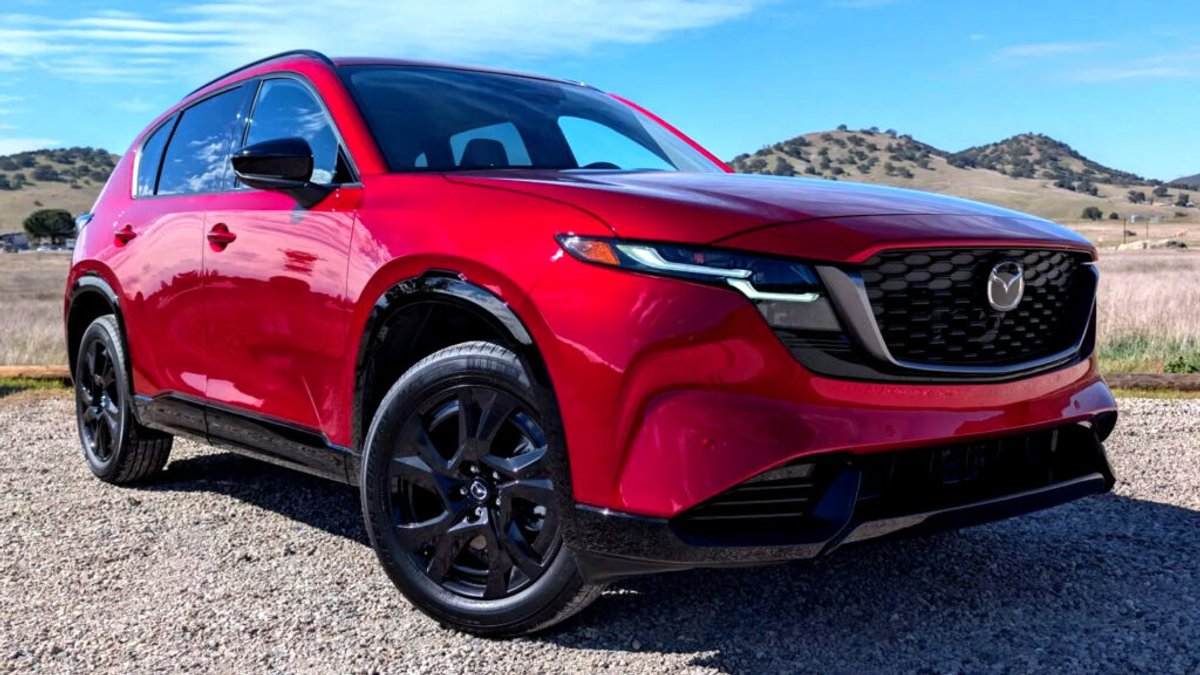
The Mazda CX-5 enters its third generation for the 2026 model year with a larger footprint, a modernized interior, and a single engine option. Available in the US from $31,485 and in Germany from €38,790, this compact SUV focuses on space and perceived quality rather than a horsepower race. But the axing of the 256-hp turbocharged four-cylinder is already causing disappointment.
"The optional turbocharged engine produced 256 horsepower in the previous CX-5, but now the only choice is the 187-hp naturally aspirated 2.5-liter inline-four." — Car and Driver
A Genuinely Bigger Footprint
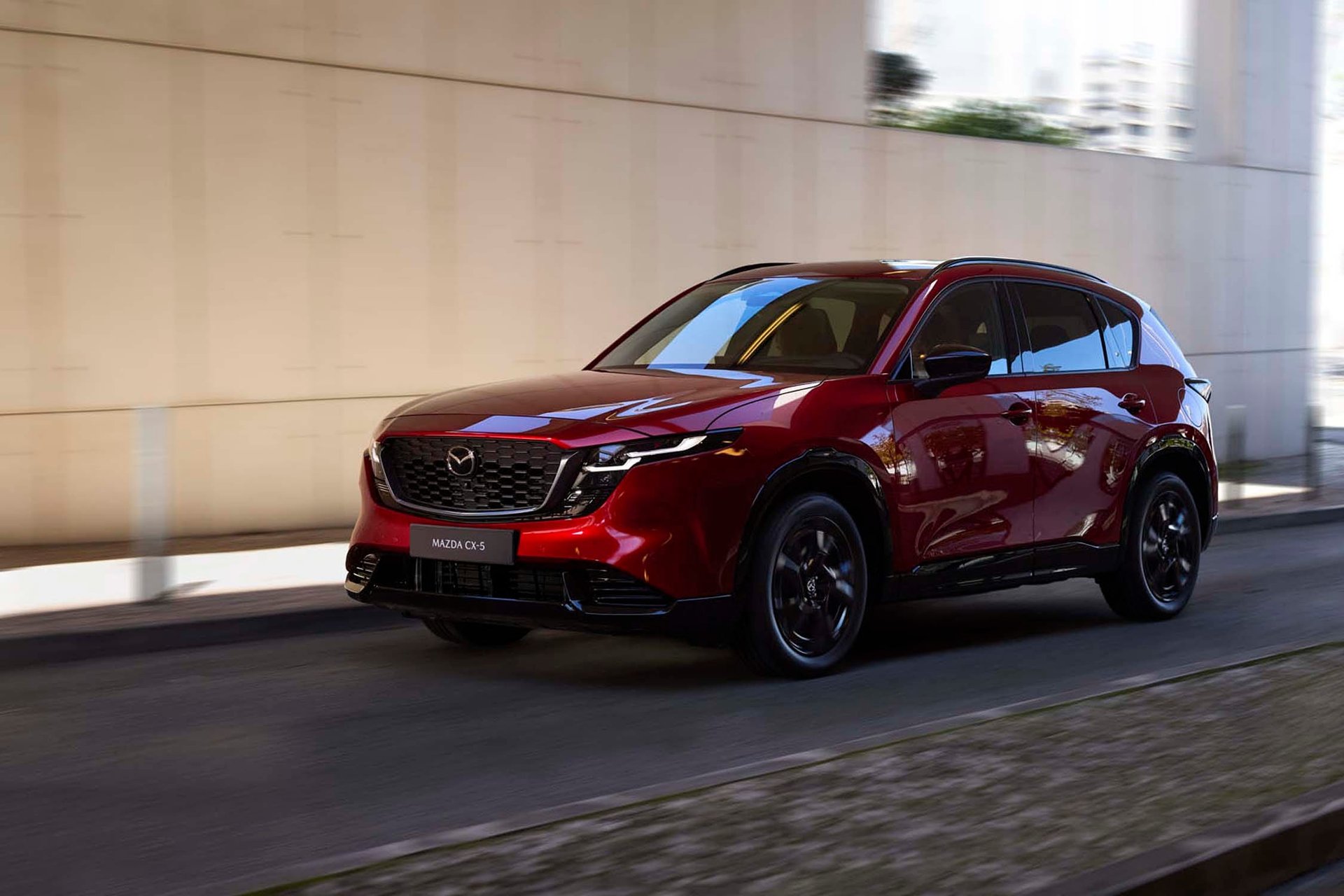
Mazda didn't half-ass it. The wheelbase grows by +11.4 cm (4.5 inches), and the overall length follows suit, reaching 4.69 meters — barely 5 cm shorter than the CX-60. Width increases by 1.2 cm. On paper, that's a serious evolution. Inside, it translates to +6 cm more rear knee room and about +3 cm more headroom, according to Le Moniteur Automobile. The rear door openings have been widened, making child seat installation easier — a detail parents will appreciate.
Cargo volume goes from 29 to 34 cubic feet (about 583 liters per Auto Bild) with the seats up, and from 59 to 67 cubic feet with the seats folded. That's an honest improvement, even if it's not spectacular.
Design: The "Signature Wing" Grille and Sharper Lights
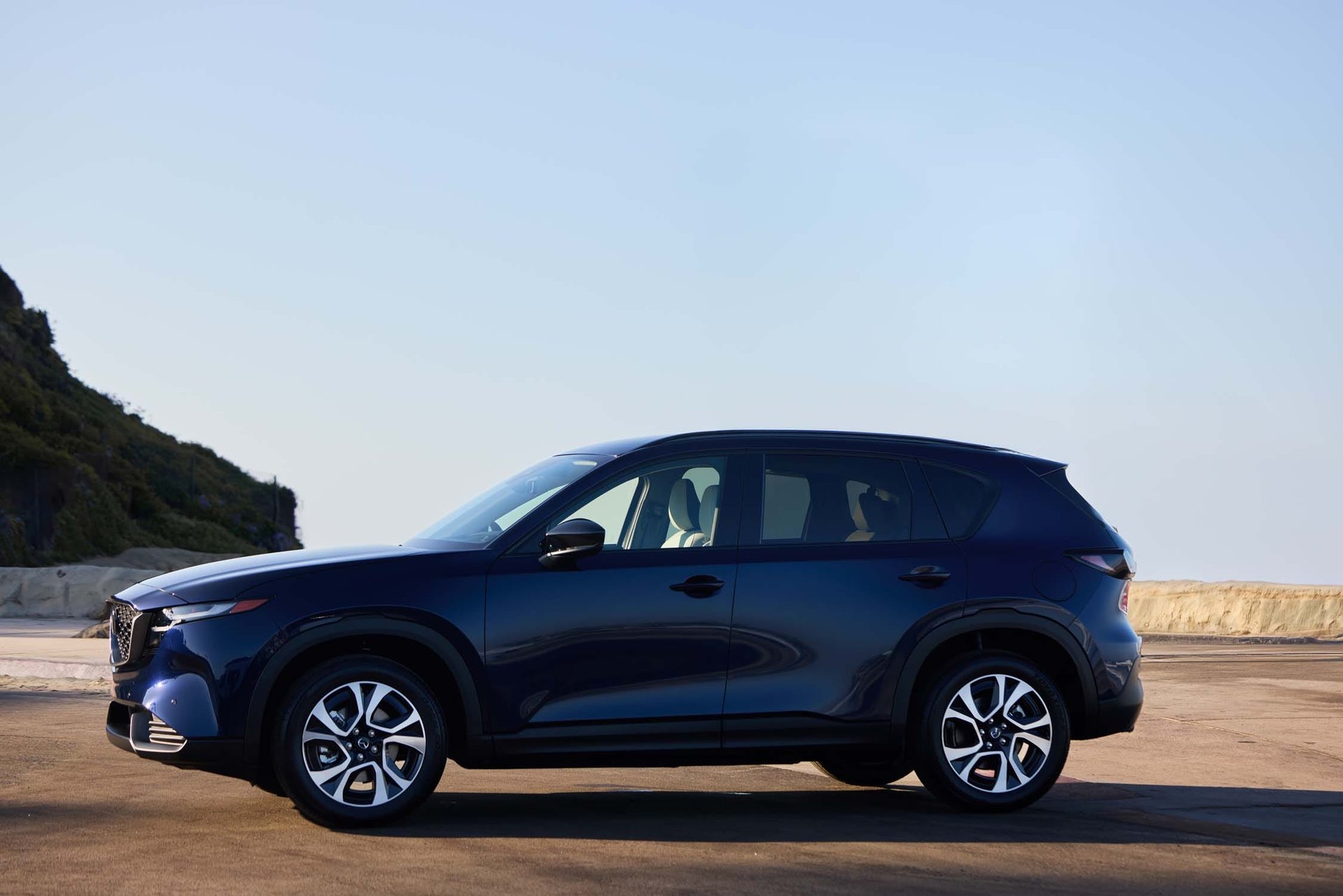
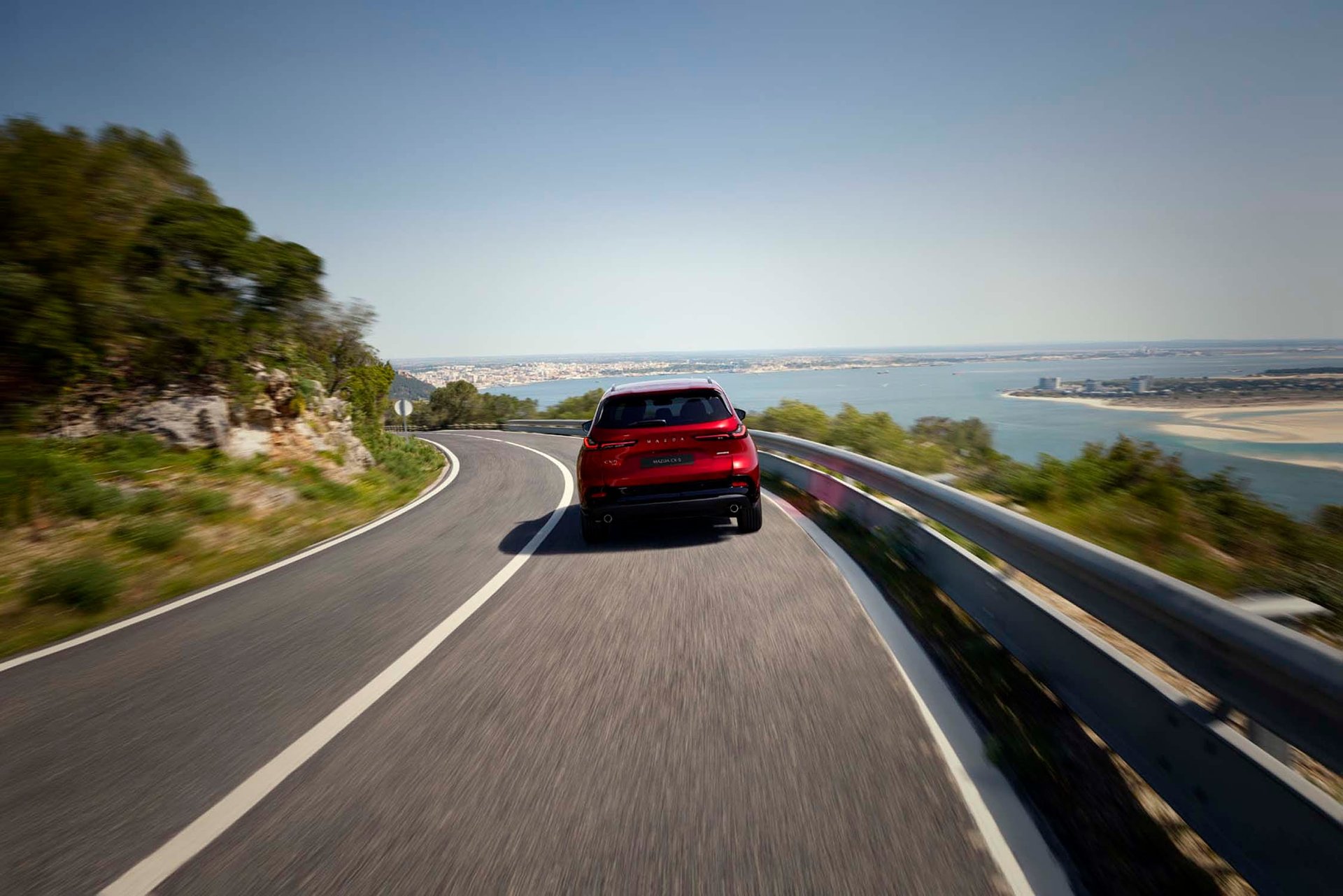
The silhouette remains recognizable — Mazda doesn't reinvent what works. The front fascia gets a new grille dubbed "Signature Wing", framed by slimmer headlights that give it a sharper stare. Out back, the taillight treatment draws inspiration from the CX-60 and CX-80, reinforcing lineup consistency. The beltline stays taut, the profile clean. Far from the rounded shapes flooding today's compact SUV market.
📋 Fiche technique
The Interior Finally Dumps the Rotary Controller… for a Big Screen
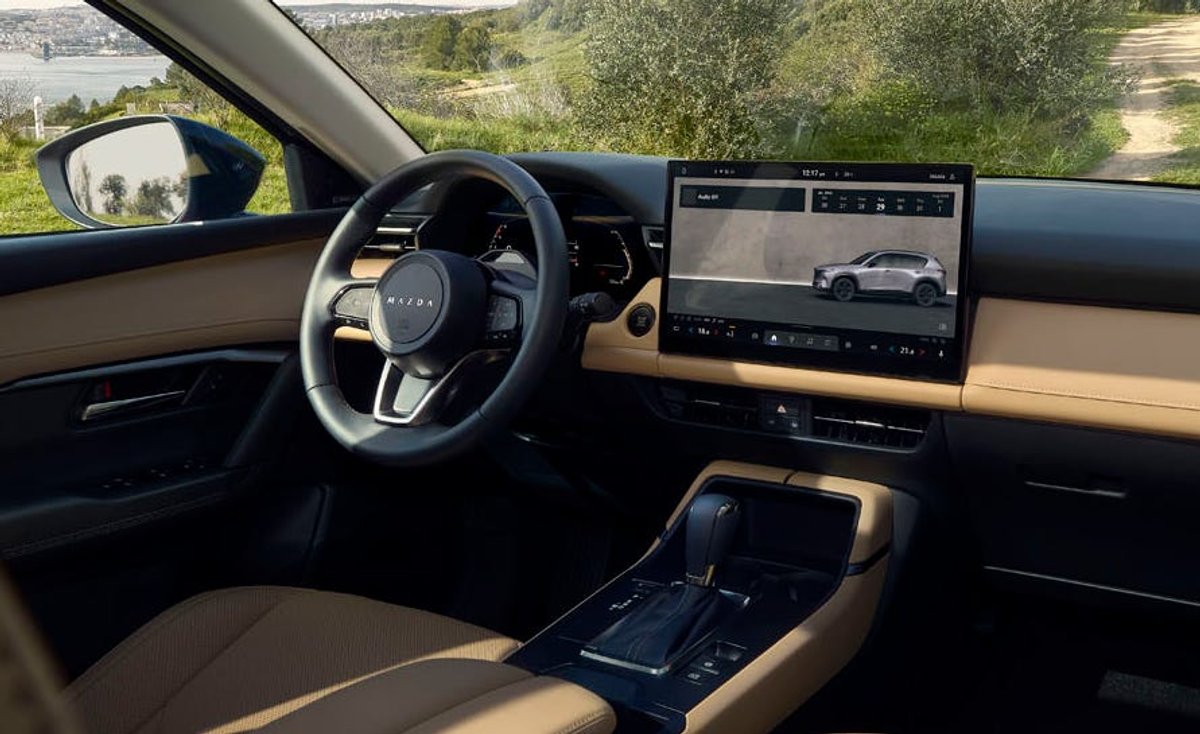
This might be the most visible change inside: Mazda abandons its small screen controlled by a rotary knob — a philosophy the brand defended tooth and nail for years. In its place: a 12.9-inch touchscreen on most trims, and a 15.6-inch unit on the Premium Plus trim. A panoramic sunroof makes its debut, and the steering wheel is redesigned. The rear seat directly benefits from the added length.
Car and Driver confirms the 2026 CX-5 moves to a "completely different interface" from the CX-50. For old-school Mazda fans, this will be a mourning period. For new buyers, it's an upgrade that was urgently needed.
A Chassis Inspired by the MX-5, Really
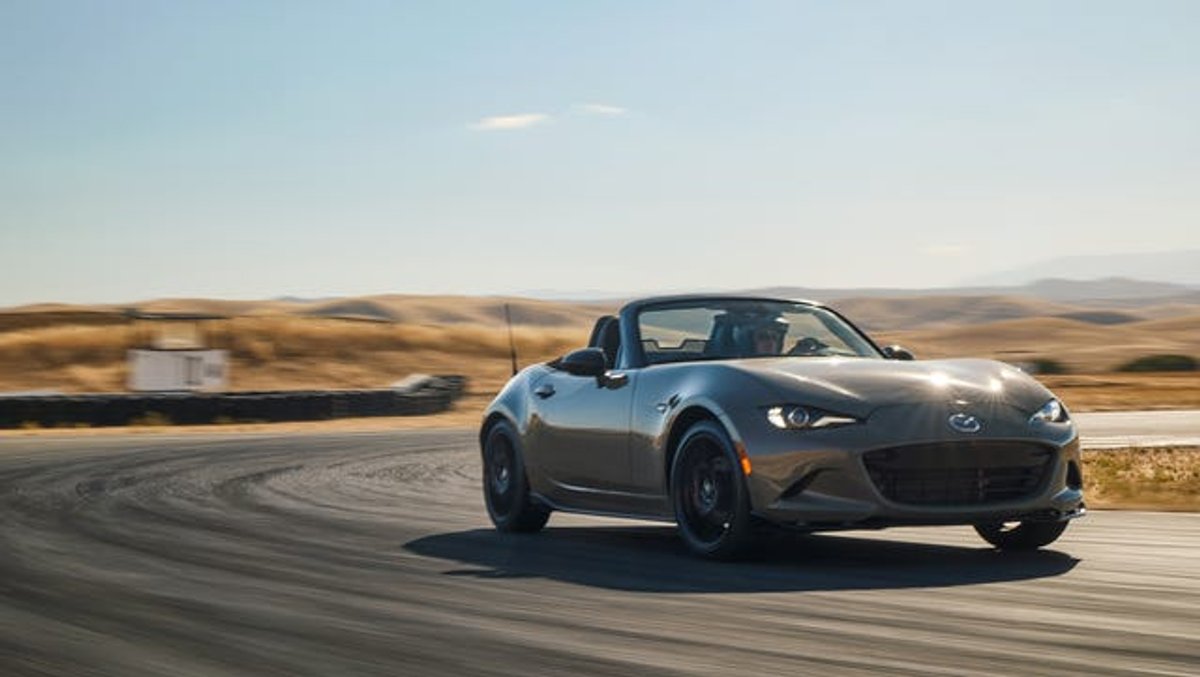
This is the detail worth pausing on. To maintain the CX-5's road manners — historically the most enjoyable compact SUV to drive in its class — Mazda invested in completely redesigned dampers. Larger piston diameter, improved valving, less friction, more sensitivity to small inputs. The philosophy comes straight from the MX-5 Miata: soft springs, firm dampers.
"It wasn't a matter of changing the character, it was just a matter of making it better," explains Ruben Archilla, senior R&D manager at Mazda, in an interview with Motor1. "The spring rate is considerably lower than it was in the previous car. That allows it to soak up a lot of imperfections."
In practice: the damping curve is more linear than before, with more effect at the beginning of the stroke and less at large amplitudes. The goal is increased comfort on rough roads without sacrificing cornering composure. On paper, it's exactly what needed to be done.
When Can You Get One?

Written by
Jules DuboisSpecialist électrique, hybride, batterie, recharge, autonomie, technologies, electrique, nouveaute
Journaliste automobile passionné par la mobilité électrique et les nouvelles technologies. Après 10 ans dans la presse spécialisée, Jules décrypte ...
View all articles (12)Read More
•2026 Mazda CX-5: Bigger, Better Equipped, Some Compromises
•Mazda MX-5: The Secret V6 and Synthetic Fuel Future
•Mazda MX-5: Secret V6 Prototype Scrapped, Future Runs on Synthetic Fuel
•Mazda MX-5 2021: Only 33% Value Loss in 5 Years
•Tesla Cybercab Production Launched, Record Q1 2026 Results
•2026 Porsche 911 Turbo S Hybrid Hits 60 MPH in 2.0 Seconds
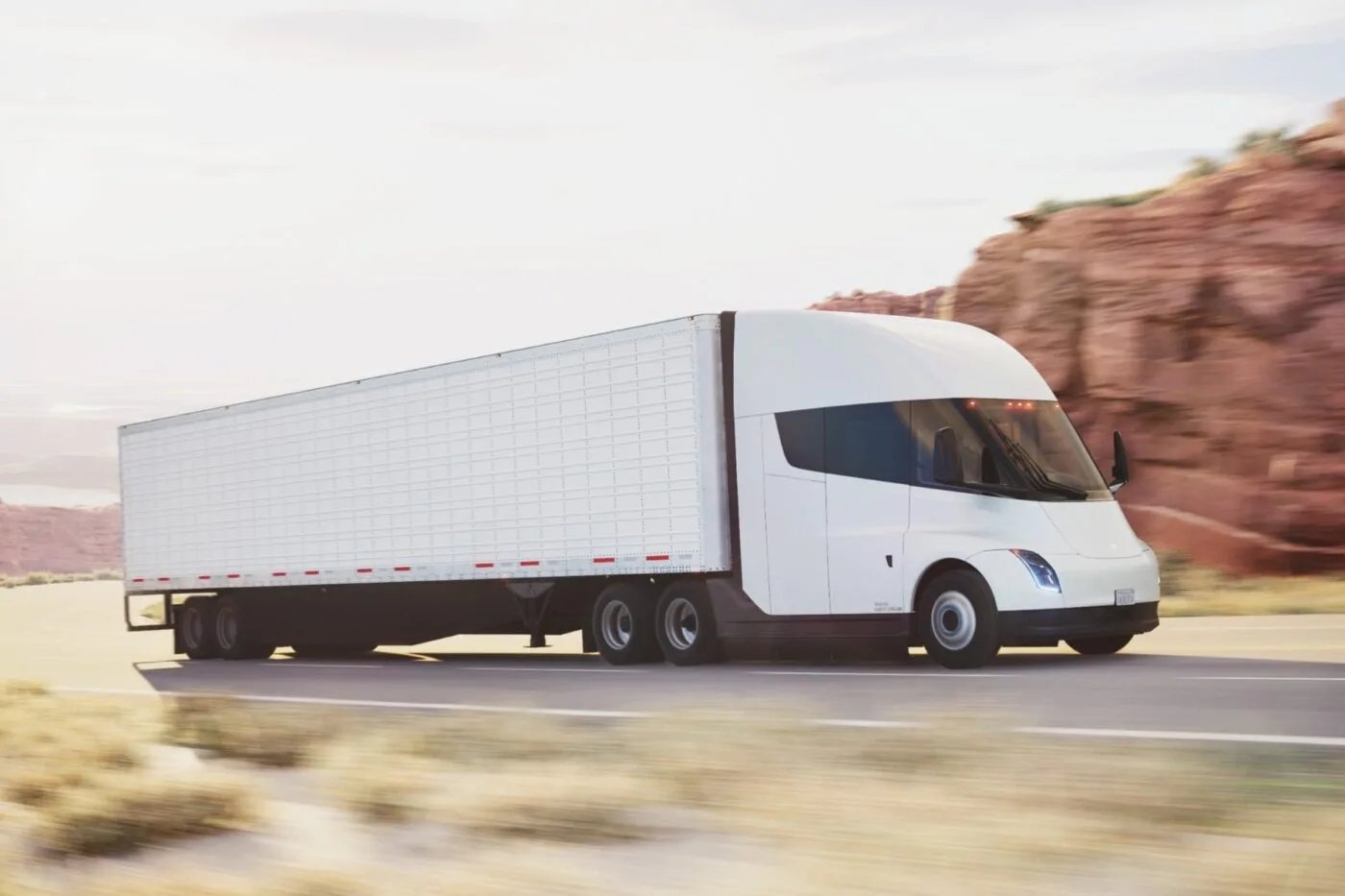
•Tesla Semi: Mass Production in 2026 with 800 kW Charging

•Lamborghini Urus: Why the Brand Refuses to Go Electric