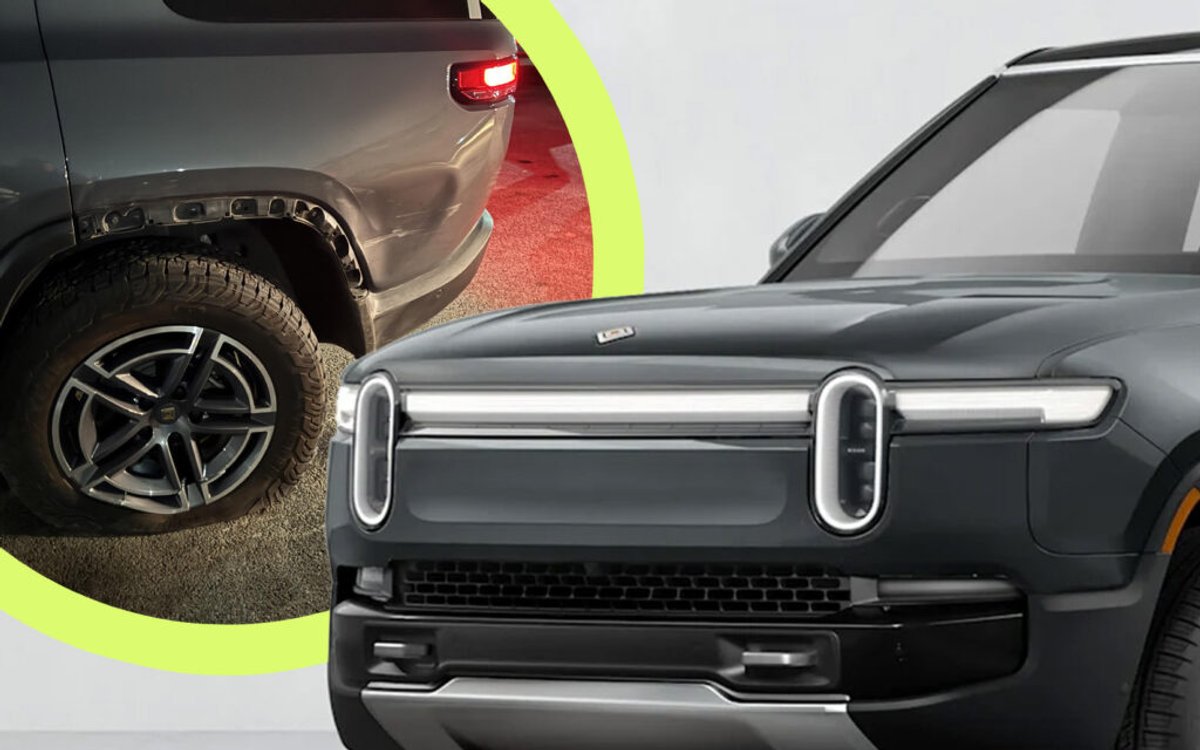
Rivian's Revenue Rises Despite Fewer Deliveries in 2025
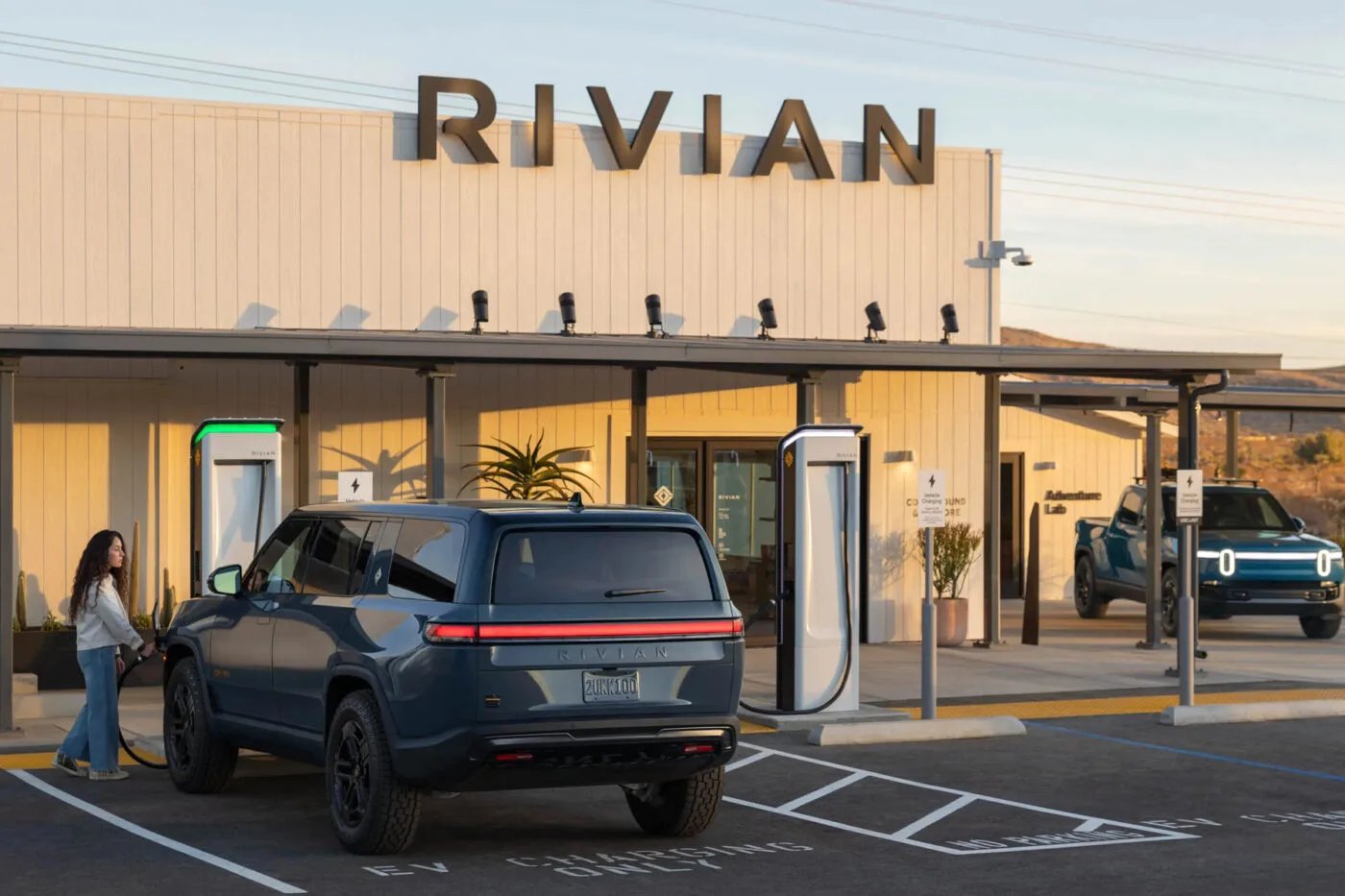
Rivian delivered 42,247 electric vehicles in 2025, 18% fewer than in 2024, yet its overall revenue rose 8% to $5.387 billion. The paradox is explained by one line in the ledger: the cooperation with Volkswagen , which sent the Software & Services segment soaring. Meanwhile, Amazon now operates over 30,000 Rivian EDV vans on American roads.
"Amazon now operates more than 30,000 electric delivery vans from Rivian, having added roughly 10,000 units within the past year." — Electrive EN, February 2026
Fewer Cars Sold, More Money Earned
On paper, 2025 looks like a bad year for Rivian. Deliveries dropped 18% from the record 51,579 units in 2024, and vehicle segment revenue fell 15% to $3.83 billion. The rise in average revenue per vehicle wasn't enough to offset the lost volume.
But where analysts expected a shipwreck, Rivian threw out a lifebuoy. The Software and Services segment generated $1.557 billion, up 222% year-over-year. Nearly all of that jump comes from the joint venture with Volkswagen, formed in 2024, in which Rivian develops an electrical/electronic (E/E) architecture and embedded software. Code for cash, in essence.
What VW Is Actually Buying
The partnership isn't just about a check. Volkswagen wants to integrate Rivian's E/E architecture into its own models, starting with the ID.1 in 2027, then into vehicles based on the future SSP platform. Rivian is delivering technology that one of the world's largest automakers couldn't develop fast enough internally.
Since summer 2025, VW holds 12.3% of Rivian's capital, making it the second-largest shareholder, just behind Amazon. The German automaker has announced its intention to increase its stake — and could eventually surpass Amazon in ownership. That would be a touch of irony, given that Amazon is also Rivian's biggest customer for commercial vehicles.
30,000 Amazon Vans: And It's Not Over Yet
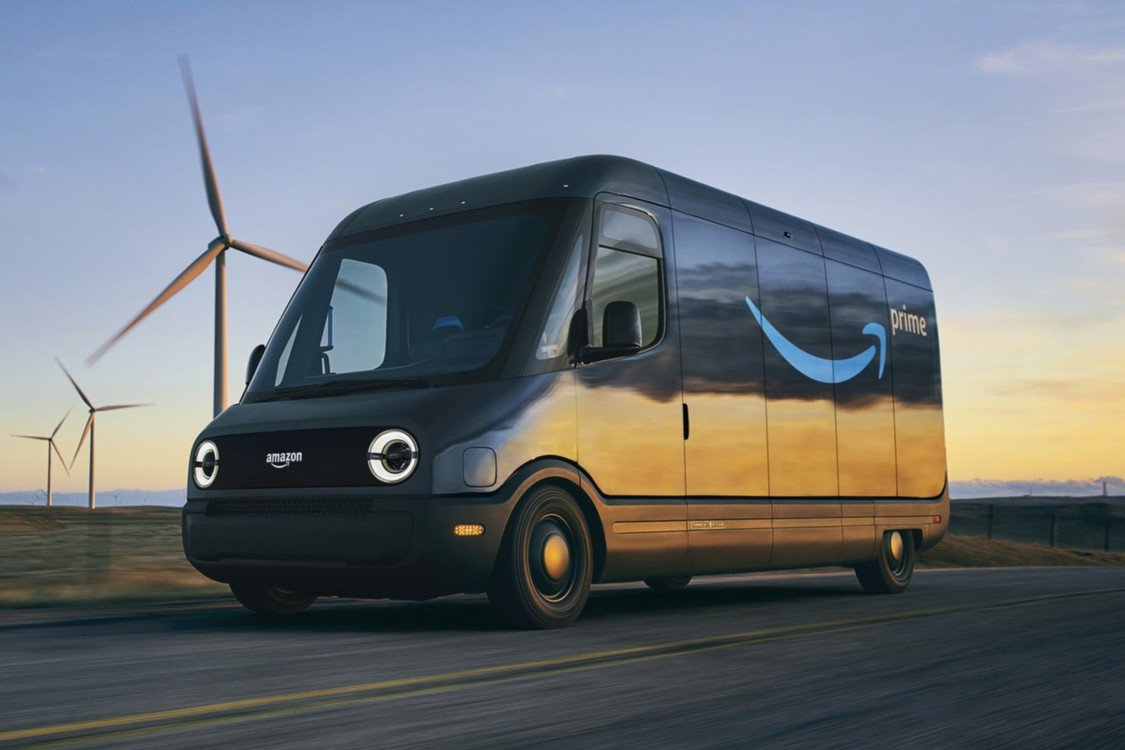
Amazon now operates over 30,000 EDVs (Electric Delivery Vans) built by Rivian. That's about 10,000 more than a year earlier. These vans deliver packages in thousands of U.S. cities. Outside the U.S., roughly 600 units operate in Germany, but the model remains almost exclusively North American for now.
Rivian isn't stopping there. The company is developing new variants with a larger battery (range up about 30%) and all-wheel drive, to cover longer routes and tougher conditions — snow, mud, rough roads. These versions will help expand Amazon's logistics network coverage.
Amazon Has Other Suppliers, But Rivian Remains the Benchmark
Rivian isn't the only manufacturer feeding Amazon's fleets. Last summer, the e-commerce giant ordered about 5,000 electric vans from Mercedes-Benz Vans — the eVito and eSprinter — deployed in five countries, with more than half destined for Germany. Amazon is diversifying its supply, a logical strategy at this volume.
Still, Rivian remains the primary supplier, by far. The total cost of ownership (TCO) of the EDVs is reportedly lower than an equivalent combustion van, according to Rivian — a claim hard to verify externally, but one that Amazon's order numbers seem to validate in practice.
How Many Losses Yet?
Despite revenue growth, Rivian posted a net loss of $3.6 billion in 2025. That's better than the $4.75 billion lost in 2024, but the trajectory remains heavy. For a company manufacturing vehicles at scale, reducing losses without increasing sales volume is an unenviable balancing act.
The VW cooperation injects revenue without requiring increased physical production — which helps improve margins structurally. But Rivian also needs to revive its consumer vehicle sales, notably the R1T and R1S, in a U.S. market for electric SUVs and pickups where competition is intensifying.
📋 Fiche technique

Written by
Jules DuboisSpecialist électrique, hybride, batterie, recharge, autonomie, technologies, electrique, nouveaute
Journaliste automobile passionné par la mobilité électrique et les nouvelles technologies. Après 10 ans dans la presse spécialisée, Jules décrypte ...
View all articles (12)Read More
•Stellantis Seeks Chinese Partner to Rescue Struggling European Operations
•Stellantis to Integrate Leapmotor Tech in Fiat, Opel, Peugeot
•Waabi raises $750M, partners with Uber for 25,000 robotaxis
•Renault Acquires Full Stake in Flexis EV Van Venture
•Toyota and Idemitsu Kosan Build Solid Electrolyte Pilot Plant