Tesla Cybercab: Production Begins, Price Confirmed Under $30,000
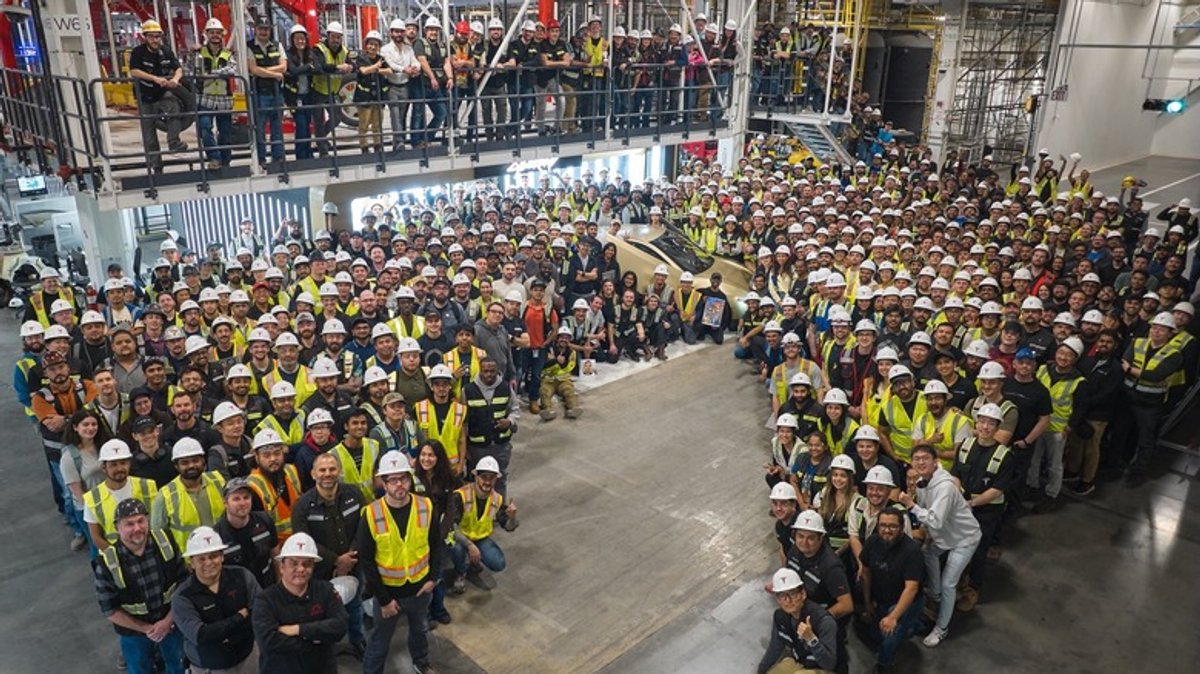
The first Tesla Cybercab rolled off the production line at the Gigafactory Texas on February 17, 2026, a full month ahead of Elon Musk's official schedule. The two-seat robotaxi, with no steering wheel or pedals, will be sold for under $30,000, with volume production slated for April 2026. But with regulatory hurdles, lingering doubts about FSD software reliability, and competition from Waymo, the road ahead is still long.
"There's no fallback mechanism here. It's like this car either drives itself or it does not drive." — Elon Musk, Tesla earnings call, January 2026
A First Unit Off the Line, But Don't Get Too Excited
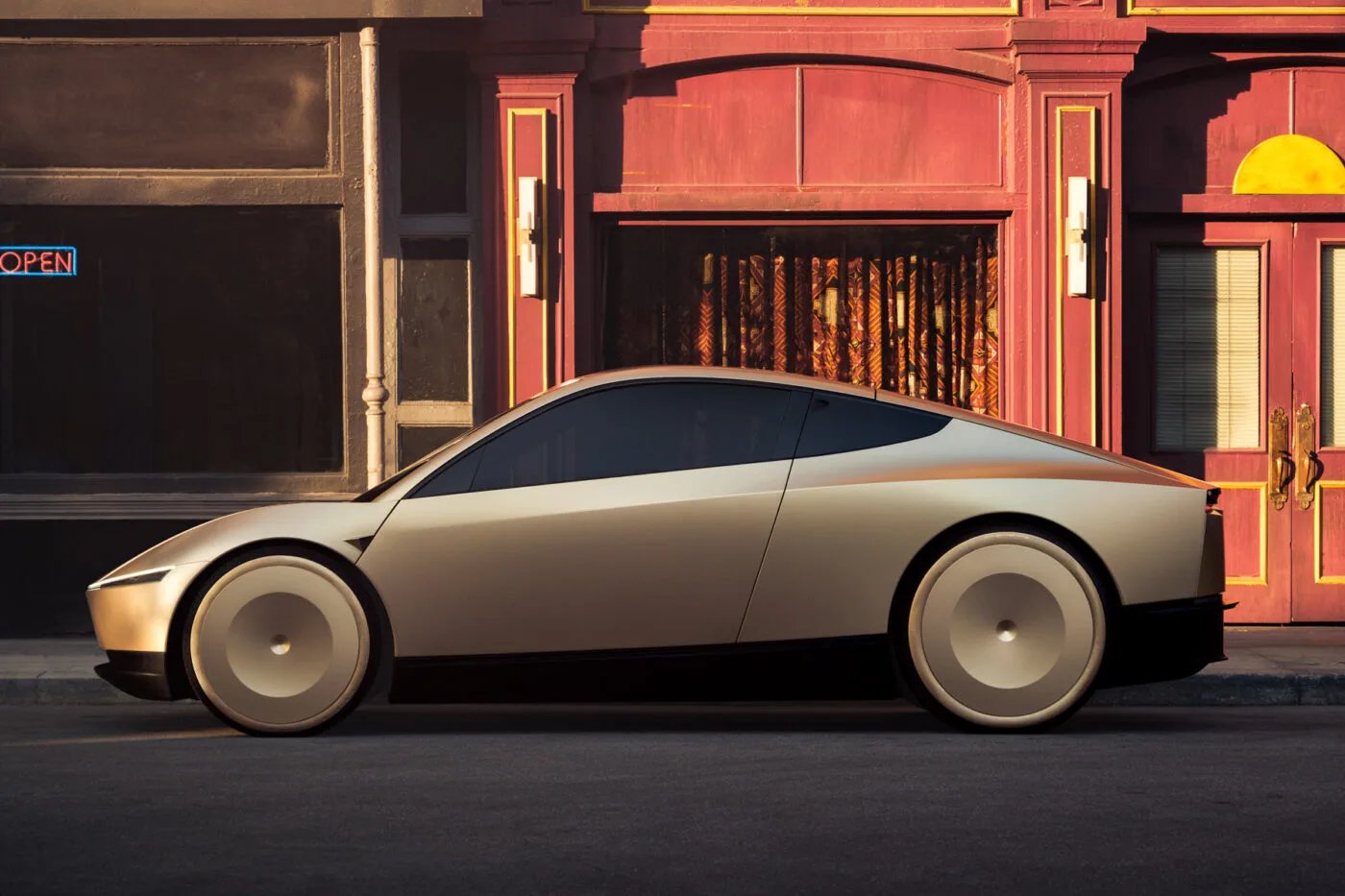
The photo Tesla posted on X on February 17 is like a game of hide-and-seek: dozens of smiling employees, and somewhere in there, a Cybercab. You can spot the windshield and a bit of bodywork. That's it. Jalopnik summed it up well: there's a car-shaped object in the crowd, surrounded by workers, and you really have to squint to see it.
That's no accident. Tesla pulled the exact same stunt when the Cybertruck launched. This kind of polished staging is part of the company's PR playbook. This first unit is almost certainly a pre-production vehicle, not a car ready to pick up passengers on the streets of Austin. Elon Musk himself confirmed in a separate post that actual production—without a steering wheel or pedals—would start in April 2026, with a commercial rollout targeted for the second quarter.
Under $30,000: Where Does That Figure Come From?
The "under $30,000" price tag has a slightly surreal origin. Musk made a bet with YouTuber MKBHD: if the Cybercab launches before the end of 2026 at that price, MKBHD will shave his head. According to Carscoops, that bet apparently motivated Musk to stick with that pricing, and he's publicly reaffirmed it ever since.
To put it in perspective, that's well below the average price of a new car in the US today. Waymo, the most serious competitor, doesn't sell vehicles to the public at this stage—their robotaxis operate as a service, not a direct sale.
📋 Fiche technique
The Real Problem: Is FSD Actually Ready?
This is where it gets sticky. The Cybercab has no steering wheel or pedals—Musk has said it repeatedly. That means there's no human fallback. If the software craps out, there's nobody to take over. And on the current robotaxis running in Austin—modified Model Ys with safety drivers on board—the accident rate was higher than the human average, according to Automobile Propre. Musk himself admitted on the January earnings call that "billions of additional miles of data" would still be needed.
In Austin, according to the site Robotaxi Tracker, 45 Tesla robotaxis are currently operating in the city, but only 7 without a human supervisor on board. Waymo, by comparison, reportedly has 200 vehicles deployed in Austin and 1,000 in the San Francisco Bay Area. The gap is real. And oddly enough, those driverless Tesla robotaxis are still followed by chase vehicles that can intervene remotely. A crutch by another name.
 fatal crash](https://res.cloudinary.com/dvxey2ykr/image/upload/v1779797268/rss/2026-05-tesla-cybercab-04.jpg "[Tesla Model 3](/article/tesla-model-y-et-model-3-nouvelles-versions-et-prix-casses-pour-democratiser-l-electrique) fatal crash")
Wireless Charging: A Regulatory Roadblock Cleared
With no steering wheel or pedals, the Cybercab obviously can't plug itself in. So Tesla has bet on inductive charging: a pad on the ground, a receiver under the vehicle, and power transfers via magnetic induction when the car parks over it.
On February 19, 2026, the FCC (Federal Communications Commission) granted Tesla a waiver to use Ultra-Wideband (UWB) technology outdoors in its charging infrastructure. This was a major hurdle: UWB was previously

Written by
Thomas MartinSpecialist SUV, suv, crossover, essai, utilitaire, familiale, pickup, comparatif, citadine, berline, cabriolet
Expert SUV et crossovers depuis plus de 15 ans, Thomas a parcouru les routes du monde entier pour tester les véhicules les plus robustes. Ancien pi...
View all articles (10)Read More
•Tesla Cybercab Production Launched, Record Q1 2026 Results
•Tesla Semi: Mass Production in 2026 with 800 kW Charging
•Tesla Model Y 2026: 7-Seat and Model Y L Arrive in Europe
•Tesla Drops Autopilot in California to Keep Selling Cars
•Tesla Cybertruck AWD at $59,990: Most Accessible Version Finally Here
•Tesla Integrates Grok, Urban Tunnels Revolutionize Mobility
•Tesla Autopilot: 8 Billion Miles, $243M Verdict
•Tesla Semi 2026: Mass Production, Specs & $165M Subsidies