Ford Puma Gen-E 2026: 417km range, same price
Ford has finally fixed the main weakness of its Puma Gen-E 2026 by boosting range from 376 to 417 km WLTP thanks to a battery increased from 43 to 46.86 kWh. The electric SUV keeps its entry price at 33,990 € while adding BlueCruise semi-autonomous driving—a first for this segment.
"Optimized battery design that pushes range from 376 to 417 km for the same price" — Ford France
Finally credible range against the competition
Ford promised it back in November: the Puma Gen-E would close the autonomy gap. It's delivered. This 2026 version now shows 417 km WLTP—41 km more than the previous generation. In pure urban driving, Ford claims 572 km, while motorway driving demands around 250 km.
This puts Ford's electric SUV squarely in the middle of its direct rivals. The Peugeot E-2008 claims 406 km, the Alfa Romeo Junior reaches 411 km, and Opel Mokka caps out at 406 km. Only the upcoming Renault 4 does slightly better with 409 km for its larger battery.
BlueCruise arrives on a compact SUV
The other standout news for the Puma Gen-E 2026 is the arrival of BlueCruise. This level 2+ semi-autonomous driving technology lets you take your hands off the wheel on certain motorway stretches while keeping your eyes on the road.
Ford offers this function via a special BlueCruise Edition series. Top-tier trims ST-Line X, ST, and Premium come standard with the B&O audio system rated at 650 W. Access to streaming and gaming services becomes available on all versions.
Price held steady despite improvements
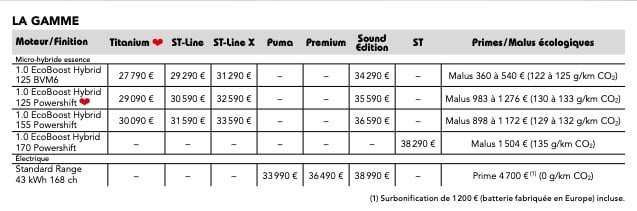
Ford chose not to pass the autonomy upgrade on to customers. The Puma Gen-E 2026 still starts at 33,990 €, or 29,490 € with negotiated dealer discounts.
📋 Fiche technique
The vehicle remains eligible for public incentives, notably the CEE Boost that can reach 7,600 €. With the government's new Auto+ Plan, Ford doubles down by adding 4,500 € in extra rebate, bringing total potential savings to 10,000 €.
What actually changes with this bigger battery?
Capacity jumps from 43 to 46.86 kWh—an 8.5% increase. Ford doesn't spell out the exact modifications, simply mentioning an "optimized battery design." The autonomy gains seem consistent with this improvement.
In real-world terms, daily driving becomes less constraining. Where the old version forced you to watch charge levels like a hawk, the new one offers a comfortable safety margin for average commutes.
How does it stack up against Chinese newcomers?
The arrival of Chinese makers like BYD and MG is reshaping the segment's rules. These brands often deliver more range for less money. The MG ZS EV, for instance, claims 440 km WLTP starting at 31,990 €.
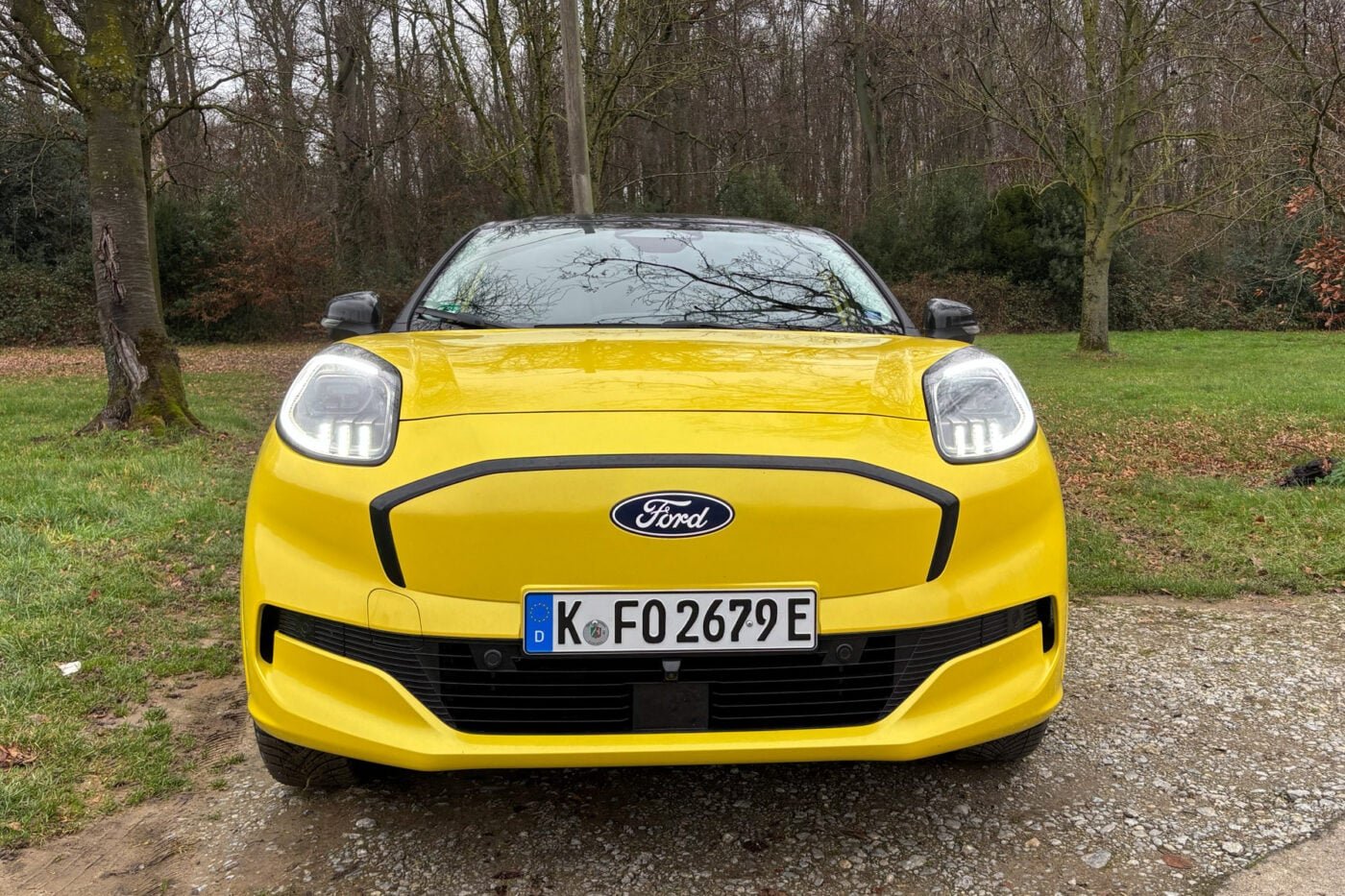
But Ford bets on other strengths: European build quality, an established dealer network, and now autonomous driving tech. BlueCruise has no direct equivalent among Chinese brands in this segment.
Is this strategy paying off for Ford?
With this update, Ford addresses the main criticism leveled at the Puma Gen-E: its autonomy shortfall.

Written by
Thomas MartinSpecialist SUV, suv, crossover, essai, utilitaire, familiale, pickup, comparatif, citadine, berline, cabriolet
Expert SUV et crossovers depuis plus de 15 ans, Thomas a parcouru les routes du monde entier pour tester les véhicules les plus robustes. Ancien pi...
View all articles (10)Read More
•Ford Puma: €199/month Lease, 417km Electric Range & Premium Audio
•Ford Mustang Sales Jump 50% as Mach-E Crashes in January 2026
•2025 Ford Mustang: Nürburgring Record, Retro Pack, Enhanced GTD