Dodge Charger Scat Pack vs Ford Mustang GT 2026
550 horsepower versus 486. Turbocharged six-cylinder versus naturally aspirated V8. All-wheel drive versus rear-wheel drive. The new 2026 Dodge Charger Scat Pack challenges the Ford Mustang GT with unprecedented technical arguments, but $4,000 separates these opposing philosophies of the American muscle car.
"The new Hurricane six-cylinder produces more power than the old 6.4-liter V8 Scat Pack" — Road & Track
Hurricane vs Coyote: A Generational Showdown
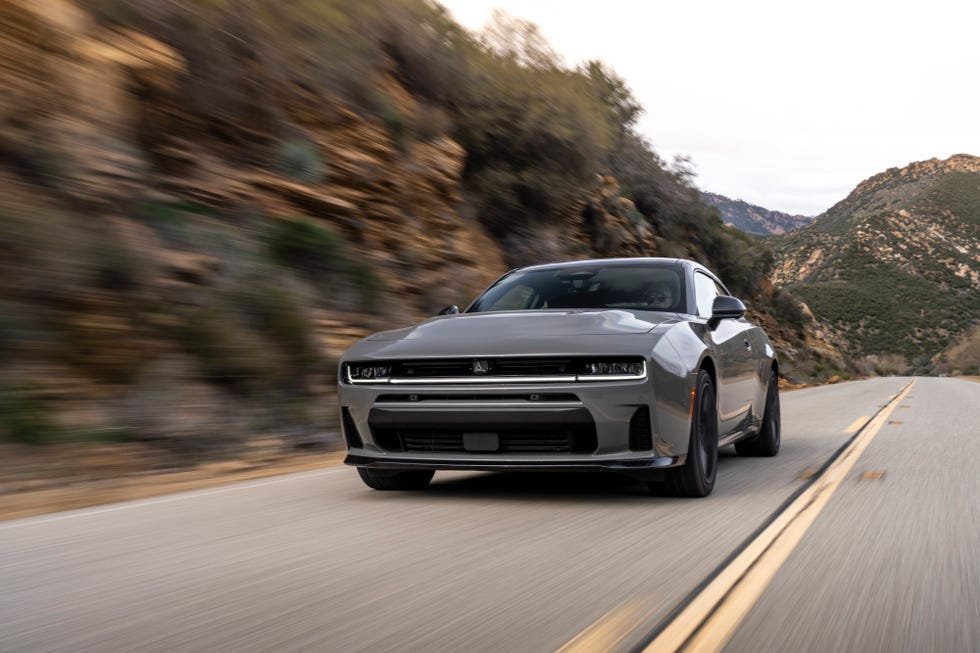
Fifty-eight years after Bullitt, Dodge abandons its Hemi V8s for a 3.0-liter twin-turbocharged Hurricane inline-six producing 550 horsepower. In the real world, that means 64 more horses than the Mustang GT's naturally aspirated 5.0-liter Coyote V8 (486 horsepower). On paper, it's impressive. On the road, the numbers tell a different story.
The Charger bets everything on technology: adaptive all-wheel drive, 531 lb-ft of torque available from 3,000 rpm (versus Ford's 418 lb-ft at 4,600 rpm), and a ZF 8-speed automatic that optimizes every gear change. Ford sticks to its proven recipe: longitudinally mounted naturally aspirated V8, rear-wheel drive, and a 6-speed manual transmission still available as standard. Two schools, two eras.
The Numbers Marketing Bulletins Don't Mention
Dodge announces 550 horsepower. What they don't specify: on what fuel, at what temperature, and especially with what durability over time (turbos age less gracefully than naturally aspirated engines). The Hurricane I6 does indeed produce more power than the old 6.4-liter V8 Scat Pack, but it takes two turbochargers to get there.
📋 Fiche technique
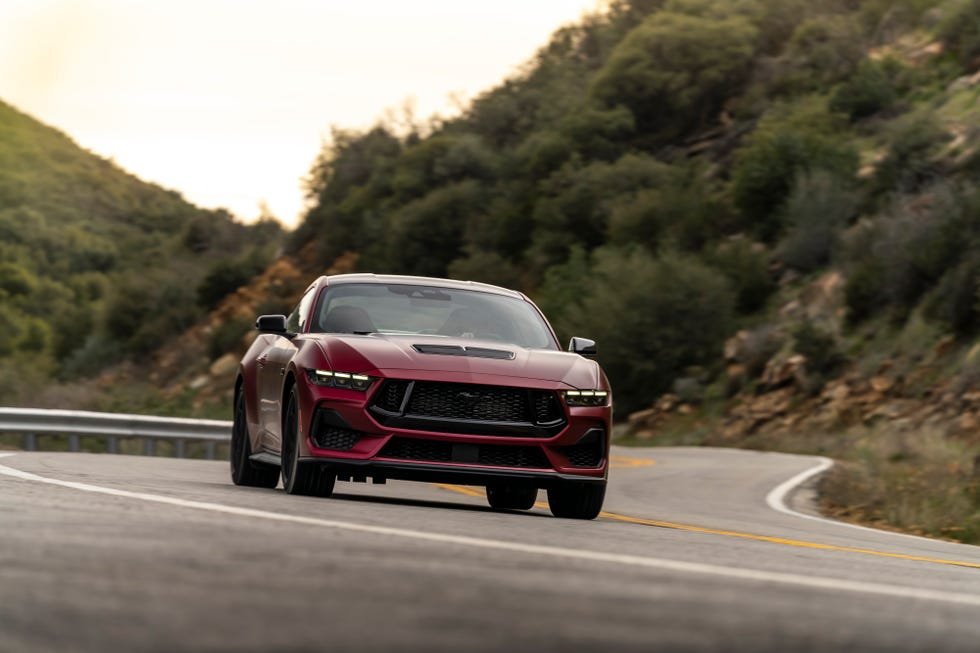
The Coyote 5.0 has existed since 2011. Thirteen years of constant refinement, proven reliability, and a linear torque curve that depends on no turbocharger. In the real world, that means: no turbo lag, no added mechanical complexity, and predictable behavior even after 200,000 miles.
Reality Check on Pricing
$56,990 for the Charger Scat Pack versus $53,075 for the Mustang GT. The $3,915 gap makes sense: the Dodge includes all-wheel drive as standard, 20-inch wheels, and more complete equipment. But watch out for the options trap.
In loaded form, the tables partly turn. The Charger tested by Road & Track ($70,950) remains cheaper than the equivalent Mustang GT Premium ($73,700). But Ford still offers a complimentary manual transmission where Dodge mandates its 8-speed automatic. For some, that's non-negotiable.
Real-World Driving: Theory vs Practice
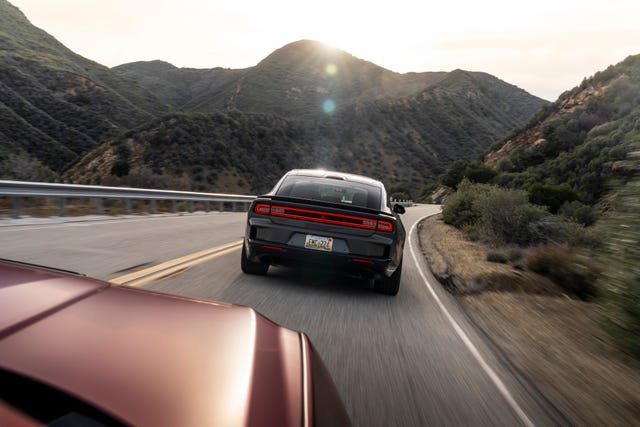
The Charger's 550 horses turn every launch into a traction masterclass. The adaptive AWD eliminates wheelspin, even on wet pavement. The Hurricane delivers its torque from 3,000 rpm, creating brute acceleration that's predictable but less theatrical. Efficient, yet less spectacular than expected.
The Mustang GT channels its 486 horses directly to the rear wheels. Result: more drama, more finesse required, but also more authenticity in the muscle car experience. The Coyote V8 revs to 7,500 rpm with linear progression that no turbo can match. Two approaches, two different kinds of thrills.
San Francisco: Real-World Test
On San Francisco's steep streets, the difference becomes stark. The Charger smooths everything over: all-wheel drive, immediate torque, effortless launches even on 20% grades. Practical, but where's the muscle car adrenaline rush gone?
[FAQ type="Questions you should ask yourself"]Q: Which one feels more like a "real" muscle car? A: The Mustang, if you value theatrical rear-wheel-drive chaos. The Charger, if you prioritize straight-line acceleration and all-weather capability.
Q: Is 64 extra horsepower worth $4,000 more at the base level? A: Not on paper. The real cost comes with options and maintenance. Turbos require premium fuel and more frequent servicing.
Q: Why would anyone choose the manual Mustang in 2026? A: Because some pleasures can't be measured in specs. A six-speed manual connected to a V8 remains the last authentic muscle car experience Detroit offers.
Q: Will the Hurricane prove as reliable as the Coyote long-term? A: Ask again in 2035. Twin-turbos are newer technology; Ford's V8 has 15 years of real-world feedback.
[/FAQ]The Verdict
The 2026 Dodge Charger Scat Pack is a competent American muscle car that replaces pure displacement with digital sophistication—and it works. More power, better traction, quicker acceleration in measured conditions. But the Ford Mustang GT remains the last honest muscle car, trading efficiency for character.
Choose the Charger if you want to obliterate acceleration metrics and conquer any weather. Choose the Mustang if you believe muscle cars should feel like they're trying to kill you, one way or another.
In real-world terms: the Dodge is faster, the Ford is more fun. Pick your poison.

Written by
Jules DuboisSpecialist électrique, hybride, batterie, recharge, autonomie, technologies, electrique, nouveaute
Journaliste automobile passionné par la mobilité électrique et les nouvelles technologies. Après 10 ans dans la presse spécialisée, Jules décrypte ...
View all articles (12)Read More
•Ford Mustang Sales Jump 50% as Mach-E Crashes in January 2026
•2025 Ford Mustang: Nürburgring Record, Retro Pack, Enhanced GTD
•2026 Ford Mustang: V8 Power vs. Electric Future
•Ford Mustang Dark Horse SC 2026: $103,490 for Supercharged V8
•Skoda Kodiaq Edition X: More Kit, Less Cash for Its 10th Birthday
•Tesla Cybercab Production Launched, Record Q1 2026 Results
•2026 Porsche 911 Turbo S Hybrid Hits 60 MPH in 2.0 Seconds
•Tesla Semi: Mass Production in 2026 with 800 kW Charging